Based on German law as of 2026. For advice specific to your situation, book a free assessment.
Key Takeaways
- To sue in Germany, you need a German-admitted attorney (Rechtsanwalt) — foreign lawyers cannot represent you in German courts.
- The process starts with a demand letter, followed by a statement of claim (Klageschrift) filed at the competent court. Attorney representation is mandatory at the Landgericht (claims above €10,000).
- German courts have jurisdiction if the defendant is located in Germany, the contract was to be performed there, or a jurisdiction clause points to Germany.
- First-instance proceedings typically take 6–12 months and cost significantly less than comparable US or UK litigation thanks to statutory fee schedules.
- Need help? Book a free initial assessment with our team.
Your German business partner stopped paying invoices. A distributor in Munich breached your contract. A former employee in Frankfurt is violating their non-compete. You need to take legal action — but the dispute is in Germany, and German law applies.
This guide walks you through the entire process of suing a company in Germany, from the initial assessment to the final judgment. It is written for US and UK businesses that have never dealt with the German legal system before.
Can You Actually Sue in Germany? Understanding Jurisdiction
Before anything else, you need to establish that a German court has the authority to hear your case. This is called jurisdiction (Zuständigkeit).
German courts generally have jurisdiction if:
-
The defendant is located in Germany — This is the most straightforward basis. If the company you want to sue has its registered office (Sitz) in Germany, you can sue them in Germany. This is governed by § 12 of the German Code of Civil Procedure (Zivilprozessordnung, or ZPO).
-
The contract was to be performed in Germany — Under § 29 ZPO, you can sue at the place where the contractual obligation was supposed to be fulfilled. If a German company was supposed to deliver goods to their warehouse in Hamburg, Hamburg has jurisdiction.
-
The harmful act occurred in Germany — For tort claims (§ 32 ZPO), you can sue where the damage occurred. This is particularly relevant for product liability, IP infringement, or unfair competition cases.
-
A jurisdiction clause exists — Many international contracts contain a clause specifying German courts. If your contract says "disputes shall be resolved before the courts of Frankfurt," that is binding.
Important for US companies: There is no concept of "long-arm jurisdiction" in Germany. You cannot sue a German company in a US court and expect that judgment to be easily enforceable in Germany. In most cases, you need to sue directly in Germany.
Important for UK companies post-Brexit: Since Brexit, the Brussels Regulation no longer applies between the UK and Germany. Jurisdiction is now primarily determined by German domestic law (ZPO) or the Hague Convention on Choice of Court Agreements, if applicable.
Step 1: Find a German-Admitted Attorney (Rechtsanwalt)
This is not optional. For any dispute above €10,000 — which covers virtually all commercial cases — you must be represented by a German-admitted attorney (Rechtsanwalt). This requirement is called Anwaltszwang and is codified in § 78 ZPO.
Your US or UK lawyer cannot represent you in a German court, regardless of their qualifications. They can work alongside your German attorney, but all court filings and appearances must be handled by someone admitted to the German bar.
What to look for in a German attorney:
- Admission to practice in Germany (Zulassung als Rechtsanwalt)
- Experience with international clients and cross-border disputes
- Fluency in English — this is critical for clear communication
- Relevant specialization (e.g., Fachanwalt für Handels- und Gesellschaftsrecht for commercial disputes, Fachanwalt für Arbeitsrecht for employment matters)
Step 2: Pre-Litigation — The Demand Letter (Abmahnung)
In Germany, it is standard practice to send a formal demand letter (Abmahnung) before filing a lawsuit. This is not legally required in most cases, but it serves several important purposes:
- It demonstrates your willingness to resolve the matter and can be viewed favorably by the court
- It may trigger a quick settlement without the cost of litigation
- In some cases (e.g., unfair competition under the UWG), a prior warning letter is actually required
- It starts the clock on default interest (Verzugszinsen) if the other side does not pay
A typical demand letter states the facts, the legal basis of your claim, the amount owed, and a deadline for payment or compliance — usually 10 to 14 days.
Pro tip: In German legal culture, the demand letter is taken seriously. Many disputes are resolved at this stage. Do not skip it.
Need to Sue a Company in Germany?
We represent US and UK companies in German commercial courts. Free case assessment within 48 hours — all communication in English.
Book a Free Consultation →Step 3: Filing the Lawsuit (Klageerhebung)
If the demand letter does not resolve the matter, your attorney will prepare and file a statement of claim (Klageschrift) with the competent court.
Which Court?
German civil courts are organized in a hierarchy:
| Court | German Name | Handles | Attorney Required? |
|---|---|---|---|
| Local Court | Amtsgericht (AG) | Claims up to €10,000 | No (but recommended) |
| Regional Court | Landgericht (LG) | Claims above €10,000 | Yes (mandatory) |
| Higher Regional Court | Oberlandesgericht (OLG) | Appeals | Yes |
| Federal Court of Justice | Bundesgerichtshof (BGH) | Final appeals on legal questions | Yes |
For commercial disputes, the Landgericht has specialized Chambers for Commercial Matters (Kammern für Handelssachen). These chambers include lay judges with business experience, which can be advantageous in complex commercial cases. Your attorney can request assignment to a commercial chamber.
What Goes Into the Statement of Claim?
The Klageschrift must contain:
- The names and addresses of both parties
- The court where the claim is filed
- A clear statement of what you are requesting (Antrag) — for example, payment of €150,000 plus interest
- A detailed description of the facts (Sachvortrag)
- The legal basis for your claim
- Evidence you intend to rely on (Beweisangebote) — documents, witnesses, expert opinions
Key difference from US litigation: In Germany, there is no discovery process. You cannot compel the other side to hand over documents before or during trial. Each party must present their own evidence. This makes it essential to gather and preserve all relevant documents before filing. For more on these procedural differences, see how German courts work.
Step 4: The Court Proceedings
After filing, the process typically unfolds as follows:
Service of the Complaint
The court serves your complaint on the defendant. The defendant then has a deadline to respond — usually two to four weeks, set by the court. You can use our response deadline checker to calculate the exact dates.
Written Briefs Phase
Both sides exchange written briefs (Schriftsätze). This is where the substantive arguments are made. German litigation is heavily document-based. Unlike common law systems, there is far less emphasis on oral argument and far more on detailed written submissions.
Oral Hearing (Mündliche Verhandlung)
The court schedules an oral hearing. In many cases, there is only one main hearing. The judge will have read all submissions in advance and will often indicate their preliminary assessment. This is a significant difference from US trials — the German judge is an active participant who asks questions and steers the discussion.
There is no jury. The case is decided by professional judges (and lay commercial judges, if applicable).
Evidence
If facts are disputed, the court may order evidence to be taken:
- Witness testimony (Zeugenbeweis) — Witnesses are questioned by the judge, not by the attorneys
- Expert opinions (Sachverständigengutachten) — The court appoints its own expert, which carries significant weight
- Document evidence (Urkundenbeweis) — Documents you have submitted with your briefs
Settlement Discussions
German judges actively encourage settlement throughout the proceedings. It is common for the judge to propose a settlement amount or framework. Statistics show that approximately 30–40% of German civil cases are resolved through court-mediated settlement.
Step 5: The Judgment (Urteil)
If no settlement is reached, the court issues a written judgment. This typically happens two to four weeks after the final hearing.
The judgment includes:
- A summary of the facts as established by the court
- The legal reasoning
- The decision (Tenor) — who pays what, who bears the costs
- Information about appeal options
Provisional Enforceability
Most first-instance judgments are provisionally enforceable (vorläufig vollstreckbar), meaning you can begin enforcement even while the other side appeals — usually against posting a security deposit.
How Long Does All of This Take?
| Phase | Typical Duration |
|---|---|
| Demand letter + response period | 2–4 weeks |
| Filing to service on defendant | 2–4 weeks |
| Written briefs exchange | 2–4 months |
| Oral hearing | 4–8 months after filing |
| Judgment | 6–12 months total |
| Appeal (Berufung), if any | Additional 6–12 months |
Total first-instance timeline: 6 to 12 months. Complex cases with expert witnesses may take 12 to 18 months.
For comparison, the average US federal civil case takes 24 to 36 months. German litigation is significantly faster.
Need it even faster? Interim injunctions (einstweilige Verfügungen) can be obtained within days to weeks in urgent cases — for example, to stop a competitor from infringing your IP or to freeze assets.
What Does It Cost? The German Fee System Explained
This is one of the biggest differences from the US and UK. German litigation costs are not based on hourly rates. Instead, they are calculated from statutory fee schedules based on the amount in dispute (Streitwert).
Court Fees (Gerichtskosten)
Court fees are regulated by the Court Costs Act (Gerichtskostengesetz, GKG). You pay them upfront when filing the lawsuit. They are calculated based on the Streitwert.
Attorney Fees (Rechtsanwaltsvergütung)
Attorney fees follow the Lawyers' Remuneration Act (Rechtsanwaltsvergütungsgesetz, RVG). The statutory fees are the minimum — you may agree on higher fees with your attorney, but the statutory fees are what the losing party must reimburse.
Example: What a €100,000 Dispute Costs
Use our litigation cost calculator to estimate the fees for your specific dispute value, or see the typical figures below:
| Cost Item | Amount (approx.) |
|---|---|
| Court fees | €2,400 |
| Your attorney (statutory) | €4,200 |
| Opposing attorney (statutory) | €4,200 |
| Total first instance | €10,800 |
The Loser-Pays Rule (Kostentragungspflicht)
Germany follows the loser-pays principle (§ 91 ZPO). The losing party pays:
- All court fees
- The winning party's statutory attorney fees
- Costs of evidence (e.g., expert witnesses)
This has two important implications for international businesses:
- If you win, the other side pays your costs. This significantly reduces the financial risk of bringing a strong claim.
- If you lose, you pay both sides' costs. This makes it essential to have a realistic assessment of your chances before filing.
Compared to the US, where each side typically bears its own costs regardless of outcome, the German system rewards strong cases and discourages frivolous lawsuits.
Ready to Take Action?
Send us the details of your dispute and we’ll outline your options within 48 hours.
Send Us Your Case Details →Enforcing the Judgment
Once you have a judgment, you may need to enforce it if the defendant does not voluntarily comply. German enforcement law offers several tools:
- Attachment of bank accounts (Kontopfändung) — Your attorney can identify and freeze the defendant's bank accounts
- Seizure of assets (Sachpfändung) — A court bailiff (Gerichtsvollzieher) can seize physical assets
- Garnishment of receivables (Forderungspfändung) — You can intercept payments owed to the defendant by third parties
- Land charges (Zwangshypothek) — For real estate owned by the defendant
- Insolvency petition (Insolvenzantrag) — As a last resort, you can file for the defendant's insolvency
Common Mistakes Foreign Companies Make
Based on 20 years of representing international clients in German courts, these are the most frequent errors:
1. Waiting too long. German statutes of limitation (Verjährung) are strict. The standard limitation period is 3 years from the end of the year in which the claim arose (§ 195, § 199 BGB). Miss it, and your claim is gone — no exceptions. Read our complete guide to German limitation periods for the full picture.
2. Assuming US-style discovery exists. It does not. Gather your evidence before you file. Emails, contracts, invoices, correspondence — everything must be in your hands.
3. Ignoring the demand letter. If you receive an Abmahnung from a German party, take it seriously. Ignoring it does not make it go away — it makes your position in court worse.
4. Using an attorney who does not speak English. Miscommunication in cross-border litigation is dangerous. Insist on an attorney who can communicate with you directly in English without relying on translators.
5. Trying to enforce a US judgment directly. US court judgments are generally not enforceable in Germany without a separate proceeding. Plan ahead — if the defendant's assets are in Germany, consider suing in Germany from the start.
How APOS Legal Can Help
We represent US and UK companies in German commercial courts from start to finish. Our lead attorney, Fatih Bektas, brings over 20 years of German litigation experience and handles everything in English — from the initial demand letter to final judgment enforcement. You never need to deal with German courts or opposing counsel directly. We file all court documents, attend all hearings, and provide regular status updates so you always know where your case stands. Book a free case assessment →
Key Takeaways
For US and UK businesses facing a dispute in Germany, here is what you need to know:
- You need a German-admitted attorney — this is mandatory for claims above €10,000
- German litigation is faster (6–12 months) and cheaper (statutory fees, not hourly billing) than US litigation
- There is no discovery — bring your own evidence
- The loser pays both sides' costs — this rewards strong cases
- Send a demand letter first — many disputes settle at this stage
- Watch the 3-year statute of limitations — it is strictly enforced
- Interim injunctions are available for urgent matters within days
Need Help With a German Lawsuit?
If your company is facing a dispute in Germany — whether you need to sue or have been sued — we can help. Fatih Bektas is a German-qualified attorney (Rechtsanwalt) and certified specialist for employment law (Fachanwalt für Arbeitsrecht) with over 20 years of litigation experience. All communication in English.
Frequently Asked Questions
Need to Sue a Company in Germany?
Whether you need to sue or have been sued in Germany — we can help. Free case assessment, usually within 48 hours.
Book Free Case Assessment →Related Practice Areas
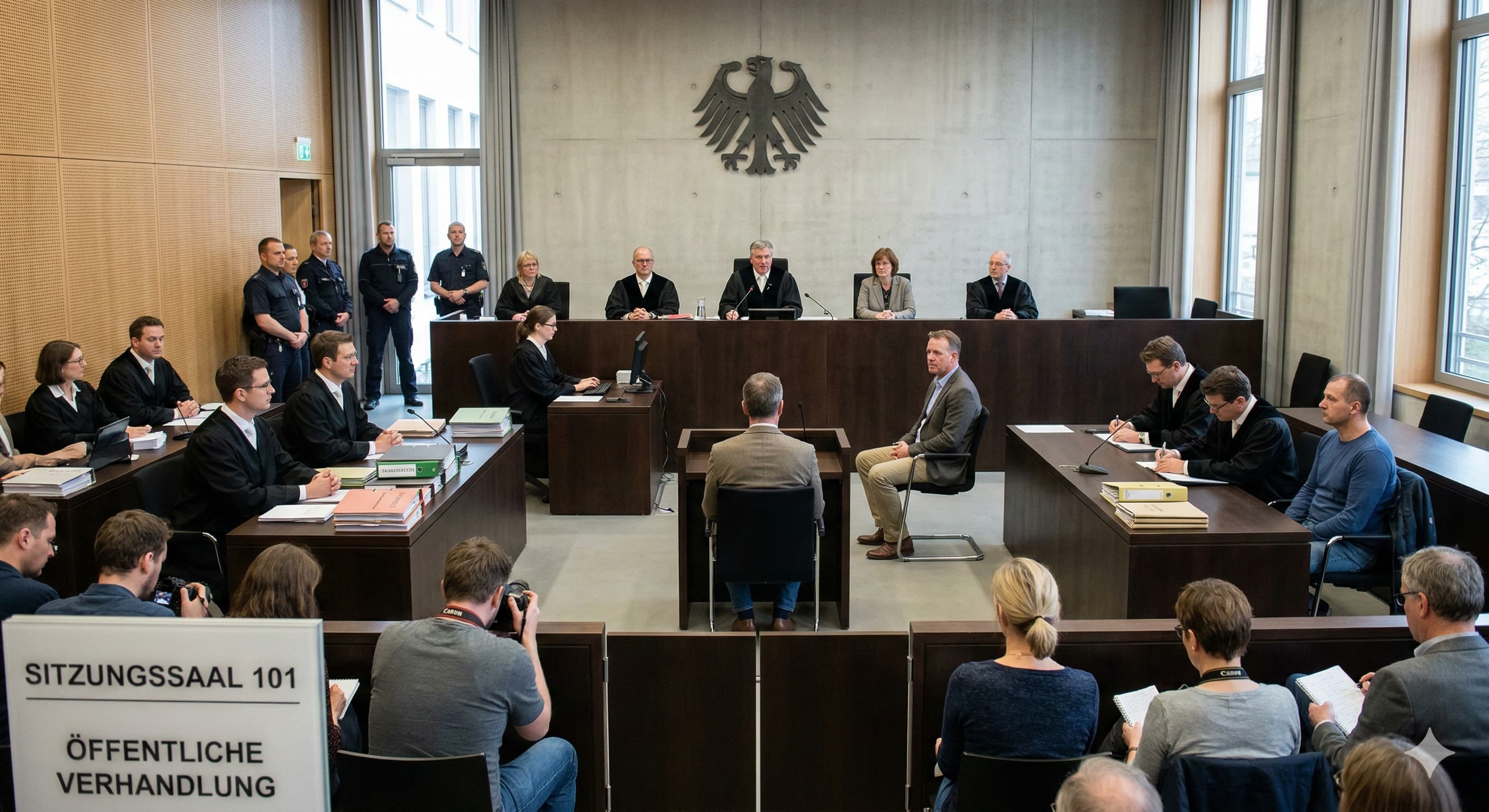
How German Courts Work: A Practical Guide for US & UK Businesses
How German courts work: no juries, no discovery, loser pays. Side-by-side comparison with US and UK courts for international businesses.

German Litigation Costs Explained: What US and UK Companies Can Expect to Pay (2026)
German litigation costs explained: statutory court fees, attorney fees (RVG/GKG), loser-pays rule, and why suing in Germany is often cheaper.
Interim Injunctions in Germany: How to Get Fast Relief in Urgent Disputes
German interim injunctions (einstweilige Verfügung): how to get emergency court orders within days, requirements, and penalties.