Based on German law as of 2026. For advice specific to your situation, book a free assessment.
Key Takeaways
- German courts can issue interim injunctions (einstweilige Verfügungen) within days — sometimes hours — to protect your rights in urgent disputes.
- You must demonstrate urgency (Eilbedürftigkeit): generally, you must act within 1 month of learning about the infringement or risk losing the right to emergency relief.
- Common use cases include trademark/IP infringement, non-compete violations, trade secret theft, and unfair competition.
- Violating an interim injunction carries penalties of up to €250,000 per violation or imprisonment — German courts enforce them aggressively.
- Need help? Book a free initial assessment with our team.
Your former German distributor is selling counterfeit versions of your product. A competitor in Berlin is using your trademark. A departing employee is about to join a rival and take your client list with them.
You cannot wait 6 to 12 months for a regular lawsuit. You need a court order now.
This is exactly what interim injunctions (einstweilige Verfügungen) are designed for. German courts can issue emergency orders within days — sometimes within hours — to protect your rights while the main case is pending.
For international businesses, interim injunctions are one of the most powerful tools in the German legal arsenal. This guide explains how they work, when to use them, and what to expect.
What Is an Interim Injunction?
An interim injunction (einstweilige Verfügung) is a temporary court order that preserves the status quo or prevents imminent harm while a full lawsuit is prepared. It is governed by §§ 935–945 ZPO (German Code of Civil Procedure).
Think of it as emergency first aid for your legal rights. It does not resolve the dispute — but it stops the bleeding until a full trial can take place.
Common types of interim injunctions include orders to stop someone from doing something (cease-and-desist), orders to preserve assets or evidence, and orders to maintain a contractual relationship temporarily.
When Can You Get One?
Two conditions must be met for a German court to grant an interim injunction:
1. A Claim (Verfügungsanspruch)
You must show that you have an underlying legal claim — for example, a trademark right being infringed, a contractual non-compete being violated, or a trade secret being misappropriated. You do not need to prove your case fully at this stage, but you must make it plausible (glaubhaft machen).
This is a lower standard than "proof" in the main proceeding. You can use affidavits (eidesstattliche Versicherungen), documents, and other evidence that would not be sufficient for a final judgment but demonstrate the likelihood of your claim.
2. Urgency (Verfügungsgrund)
You must show that the matter is urgent — that waiting for a regular lawsuit would cause irreparable harm or make enforcement meaningless.
This is critical: if you wait too long, you lose the right to an interim injunction. German courts expect you to act promptly once you learn of the infringement or threat — check your remaining time with our deadline tool. The exact time frame varies by court and subject matter:
- IP and trademark cases: Most courts require action within 4 to 8 weeks of learning about the infringement. Some courts (notably Munich) apply an even stricter standard.
- Employment cases (non-compete violations): Typically 2 to 4 weeks.
- Commercial disputes: Varies, but generally within 1 to 2 months.
If you knew about the problem for 3 months and did nothing, the court will likely deny urgency. Act fast.
How German Interim Injunctions Compare to US and UK Relief
If you are accustomed to US or UK emergency proceedings, several differences stand out:
Speed. German interim injunctions are significantly faster. In the US, obtaining a Temporary Restraining Order (TRO) typically takes 1–2 weeks; a preliminary injunction often requires months of briefing and a hearing. In Germany, ex parte orders can be issued within 24–48 hours, and contested injunctions within 2–4 weeks.
Standard of proof. US courts apply a multi-factor test for preliminary injunctions: likelihood of success on the merits, irreparable harm, balance of hardships, and public interest. German courts use a simpler two-part test: plausible claim plus urgency. There is no "balance of hardships" weighing — if your claim is plausible and the matter is urgent, the injunction is granted.
No bond requirement by default. In the US, courts routinely require the applicant to post a bond. German courts may require a security deposit (Sicherheitsleistung), but this is not automatic and is often waived, especially in IP cases.
Penalties for violation. US contempt of court sanctions vary widely and are often difficult to enforce. German penalties are statutory and severe: up to €250,000 per violation or 6 months imprisonment for responsible directors. German courts enforce these routinely.
UK comparison. UK interim injunctions (formerly "interlocutory injunctions") follow the American Cyanamid test, which requires showing a "serious question to be tried." The process takes 2–6 weeks — slower than Germany but faster than the US. UK courts routinely require a "cross-undertaking in damages," similar to Germany's § 945 ZPO liability for unjustified injunctions.
For international businesses, the German system offers a combination of speed, low cost, and powerful enforcement that makes it one of the most effective jurisdictions worldwide for emergency relief.
Need Emergency Court Relief in Germany?
We obtain interim injunctions within days — for IP infringement, non-compete violations, and urgent commercial disputes. Contact us now.
Book a Free Consultation →How the Process Works
Without Oral Hearing (Ex Parte)
In cases of extreme urgency, the court can issue an interim injunction without hearing the other side (ohne mündliche Verhandlung). This is the fastest option:
- Your attorney files the application with supporting evidence
- The judge reviews it — sometimes the same day
- If satisfied, the judge issues the order
- The order is served on the defendant
This process can take as little as 24 to 48 hours. In genuinely emergency situations (e.g., a trade fair where infringing products are being displayed), some courts have been known to issue orders within hours.
The defendant can then file an objection (Widerspruch), which triggers an oral hearing.
With Oral Hearing
In less extreme cases, the court will schedule an oral hearing before deciding. This takes longer — typically 2 to 4 weeks — but gives both sides the opportunity to be heard.
The hearing is short and focused. The judge has already read the submissions and will ask targeted questions. A decision is usually rendered the same day or within a few days.
What Can an Interim Injunction Order?
Interim injunctions in Germany can order a wide range of measures:
Cease-and-desist orders — The most common type. The defendant must immediately stop specific behavior: selling infringing products, using your trademark, contacting your customers, violating a non-compete clause.
Delivery or surrender orders — In some cases, the court can order the defendant to hand over specific items (e.g., infringing goods).
Publication prohibitions — Stop the defendant from publishing defamatory statements or confidential information.
Preliminary payment orders — In rare cases, courts can order interim payments. This is exceptional and requires showing that you are in urgent financial need.
Preservation of evidence — While not technically an interim injunction, you can apply for a separate order to inspect and secure evidence that might be destroyed (§ 485 ZPO, selbständiges Beweisverfahren).
Costs and Risks
Costs
Interim injunction proceedings are relatively inexpensive. Court fees and attorney fees are calculated the same way as in regular proceedings (based on the Streitwert), but often at a reduced dispute value.
Typical total costs for an interim injunction: €3,000–€8,000 depending on the dispute value. For a full comparison, see our guide to German litigation costs.
The Security Deposit Risk
If the injunction is later found to be unjustified — for example, because you lose the main lawsuit — you are liable for all damages the defendant suffered from the injunction (§ 945 ZPO). The defendant can also request that you post a security deposit (Sicherheitsleistung) before the injunction is enforced.
This is the primary risk of interim injunctions: if you are wrong, you pay. This makes it essential to have a strong underlying claim before filing.
What Happens If the Defendant Violates the Injunction?
German courts enforce interim injunctions seriously. If the defendant violates the order:
Penalty fine (Ordnungsgeld): Up to €250,000 per violation. The court sets the amount based on the severity of the violation.
Imprisonment (Ordnungshaft): Up to 6 months for the responsible director or managing director. This is imposed if fines are insufficient to deter the violation.
These penalties are not theoretical — German courts regularly impose them. A single violation of a cease-and-desist order can cost the defendant tens of thousands of euros.
To enforce the penalty, you must file a motion with the court demonstrating the violation. Your attorney handles this process.
The Main Proceeding: What Comes After?
An interim injunction is temporary. To make it permanent, you typically need to file a main lawsuit (Hauptsacheklage). Be mindful of the statute of limitations when planning the main proceeding. The court may set a deadline for this.
However, in practice, many disputes are resolved after the interim injunction is granted:
- The defendant complies and the parties negotiate a settlement
- The defendant issues an Abschlusserklärung (final declaration) accepting the injunction as a permanent resolution
- The defendant files an objection, leading to a hearing that effectively serves as a mini-trial
In practice, the majority of interim injunction cases are resolved without a separate main proceeding.
Ready to Take Action?
Send us the details of your dispute and we’ll outline your options within 48 hours.
Send Us Your Case Details →Interim Injunctions in Specific Areas
Intellectual Property (Trademarks, Patents, Copyright)
Germany is one of the most popular jurisdictions worldwide for IP enforcement, precisely because of the speed and effectiveness of its interim injunction system. Courts in Munich, Hamburg, Düsseldorf, and Mannheim have specialized IP chambers with deep expertise.
For trademark infringement, a well-prepared application can result in a cease-and-desist order within 1 to 2 weeks.
Employment (Non-Compete Violations)
If a former employee is violating a post-contractual non-compete clause, an interim injunction can stop them immediately. The key requirement: the non-compete must be valid under German law (which requires compensation of at least 50% of the employee's last salary during the non-compete period).
Unfair Competition
Misleading advertising, trade secret theft, poaching of employees or customers — all can be addressed through interim injunctions under the German Unfair Competition Act (UWG). The urgency requirement is strictly enforced in UWG cases.
Practical Tips for International Companies
Act within days of discovering the problem. Every day you wait weakens your urgency argument. Contact a German attorney as soon as you learn of the infringement.
Gather evidence immediately. Screenshots, purchase confirmations, printouts of websites, photographs of infringing products, copies of emails — anything that makes your claim plausible. Have it ready when you call your attorney.
Prepare an affidavit. Your attorney will likely need you to sign an eidesstattliche Versicherung (affidavit in lieu of oath) describing the facts. This is a sworn statement — the content must be accurate and truthful.
Choose the right court. For IP matters, certain courts have specialized chambers and more favorable practices. Your attorney can advise on the optimal forum.
Consider the main proceeding early. An interim injunction buys you time, but you should have a strategy for the main case from the start.
How APOS Legal Can Help
When time is of the essence, we move fast. We have obtained interim injunctions for international clients in as little as 48 hours — in IP disputes, non-compete violations, trade secret misappropriation, and urgent commercial matters. We know which courts to file at, how to frame the urgency argument, and when to pursue ex parte relief. Contact us immediately if you have an urgent matter — every day counts.
Key Takeaways
- Interim injunctions can be obtained in days to weeks — sometimes within 24 hours in extreme cases
- You need a plausible underlying claim and genuine urgency — delay destroys urgency
- Courts can issue orders without hearing the other side in urgent cases
- Violation of an injunction can result in fines up to €250,000 or imprisonment
- The cost is relatively low (€3,000–€8,000) but you risk damages liability if the injunction is later found to be unjustified
- Germany is one of the best jurisdictions worldwide for fast IP enforcement
- Most cases are resolved after the injunction without a full main proceeding
Need Fast Action in Germany?
If you are facing an urgent situation — IP infringement, non-compete violation, trade secret theft — contact us immediately. We can assess whether an interim injunction is available and, if so, file the application within days.
→ Book an urgent consultation | → Email us now: bektas@apos.legal
Frequently Asked Questions
Need Emergency Court Relief in Germany?
Whether you need to sue or have been sued in Germany — we can help. Free case assessment, usually within 48 hours.
Book Free Case Assessment →Related Practice Areas

How to Sue a Company in Germany: The Complete Guide for US and UK Businesses (2026)
Step-by-step guide for US & UK companies suing in Germany. Courts, attorney rules, costs, timelines, and the loser-pays rule.
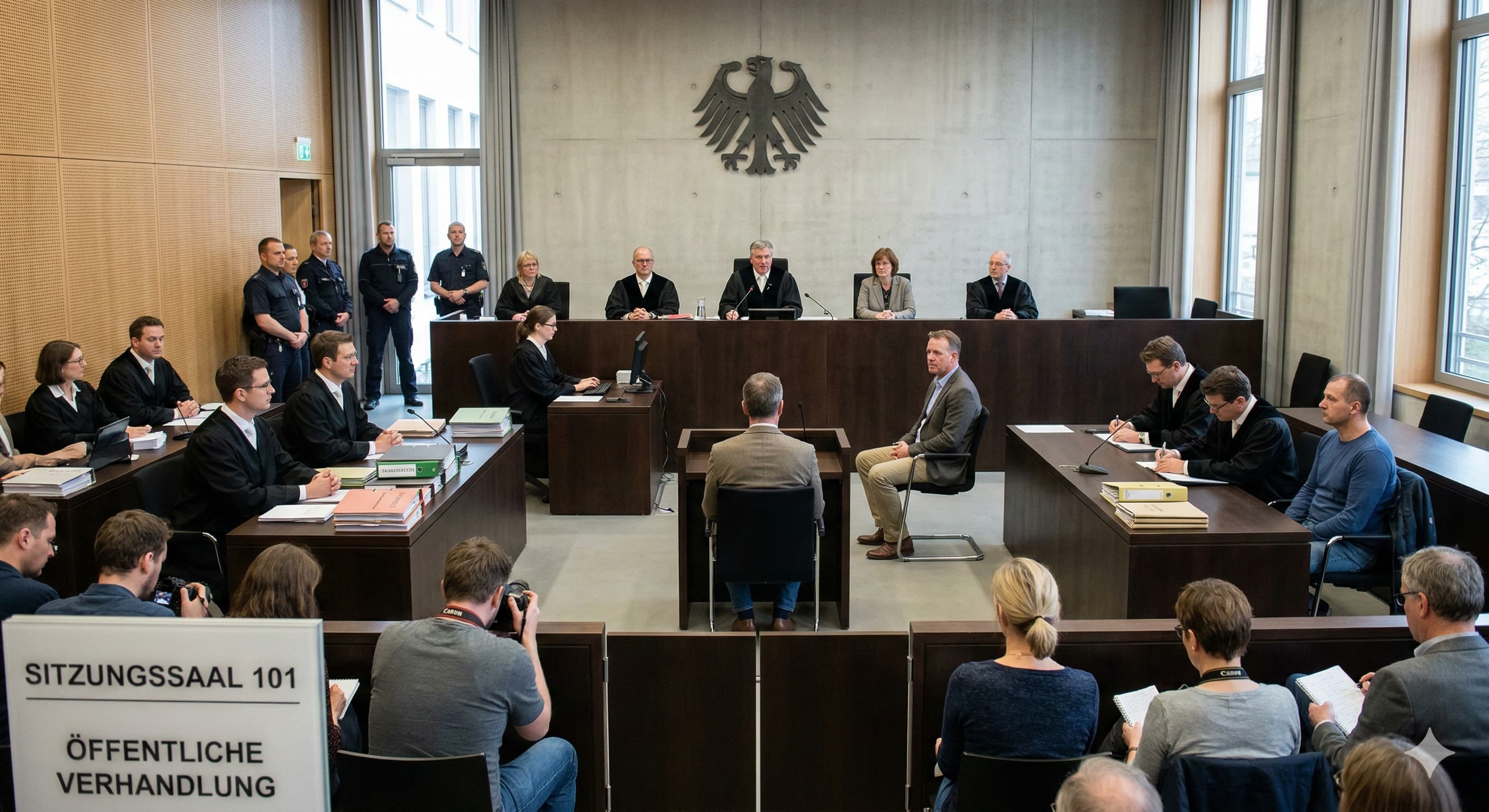
How German Courts Work: A Practical Guide for US & UK Businesses
How German courts work: no juries, no discovery, loser pays. Side-by-side comparison with US and UK courts for international businesses.

Statute of Limitations in Germany: Key Deadlines That Can Kill Your Claim
German statute of limitations (Verjährung): the 3-year rule, when the clock starts, how to stop it, and critical deadlines for your claim.